 Powered by SlotsReach.com
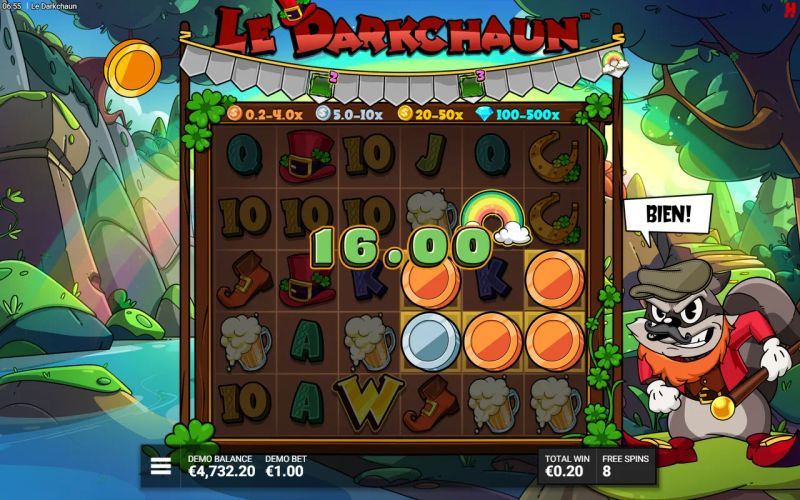
Hacksaw Gaming is back at it, adding another title to their infamous “Le” series. Enter Le Darkchaun. If you’ve spent any time chasing coins in Le Bandit, you’re going to feel right at home here. Operating on a 6×5 grid, this isn’t a game about massive cluster pays: it’s a pure collect-engine slot.
But does the math hold up, or is this just the same formula again, meant to drain your balance?
The Base Game: Painting the Board
Here is the first thing you need to know about Le Darkchaun: the clusters on the board aren’t the prize. They are literally just the fuse.
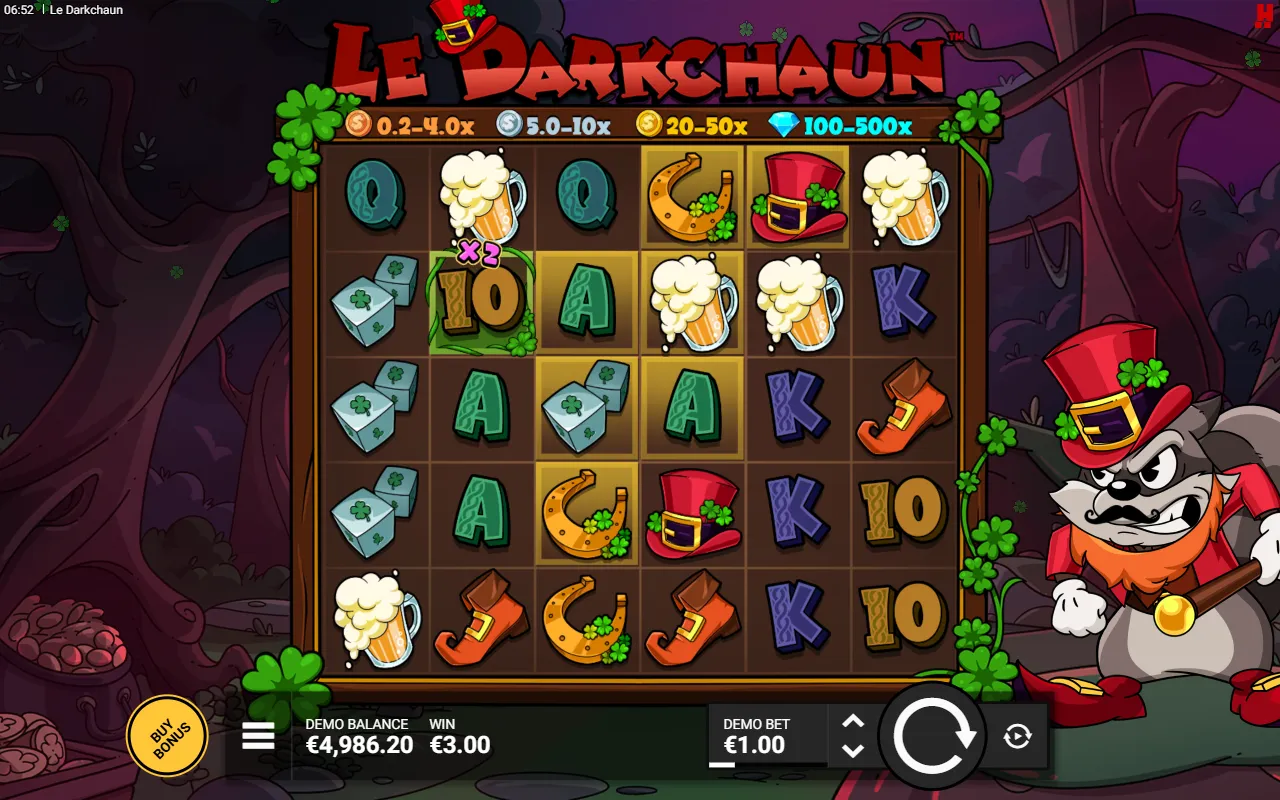
When you land a winning cluster, it triggers a Super Cascade. This doesn’t just remove the winning symbols; it wipes every symbol of that type from the entire grid, dropping new ones in and highlighting the winning cells as “Golden Squares.” But those squares pay nothing on their own. To get paid, you are entirely reliant on landing a Rainbow symbol on the same spin to turn those lit cells into cash coins.
Because of this, the paytable is brutally flat. To just win your stake back (1x), you need ten card ranks, eight Dice, or five of the premium red Hats. Anything smaller hands back a fraction of your bet. Over my 60 or so base game spins, the clusters did almost no heavy lifting. My biggest standalone cluster win was an eight-Hat combo with a Wild that paid a measly 3x.
Where the Potential Hides: Multipliers & Modifiers
If the base symbols pay peanuts, where does the 15,000x max win come from? Multipliers, of course.
When a Wild is part of a win, it leaves a sticky x2 Position Multiplier on its cell. If another Wild win hits that exact spot, the multiplier doubles, climbing all the way up to x100. If your Rainbow reveals a top-tier 500x Diamond coin on a x100 square, the math gets out of hand very quickly. The reveal phase can also drop Clovers that multiply coins by up to x20, and Pots of Gold that sweep the entire board so the squares can reveal cash all over again.
Mechanically, Hacksaw has been running this exact loop for a while now. It’s a solid step sideways rather than a reinvention of the wheel. However, I have to give them massive credit for the math model: the 97.52% RTP is incredibly high for a modern slot, beating out its siblings and similar games (like Dragon’s Pub, which stops at a 10k max win with a lower return).
The Arc Adventure Free Spins
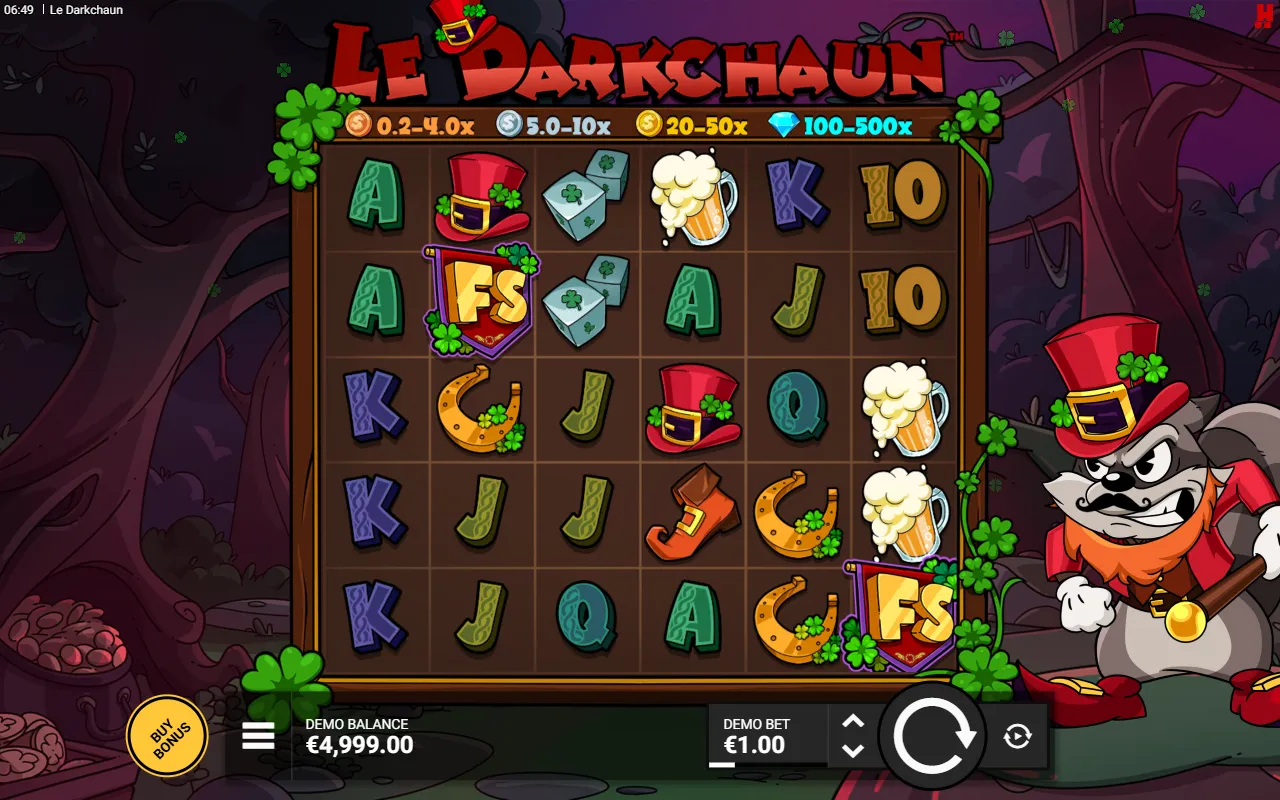
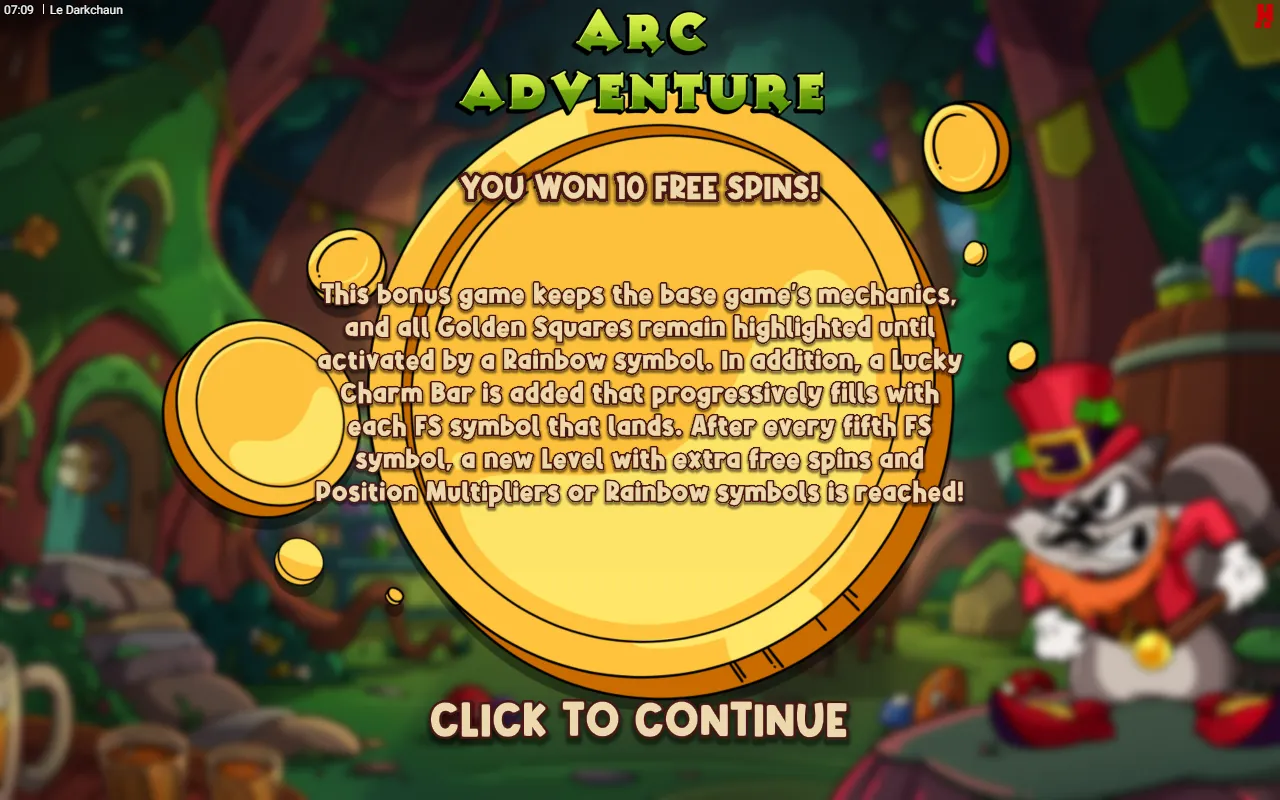
Landing three FS scatters triggers the Arc Adventure bonus, awarding 10 free spins. This is where the game takes the handcuffs off.
In the bonus, Golden Squares stay lit between spins until a Rainbow finally cashes them in, and Position Multipliers become permanent for the whole round. There’s also a Lucky Charm Bar above the grid that tracks any new scatters you land. Collect five, and you level up, getting five extra spins and extra multipliers. Reach Level 3, and you are guaranteed a Rainbow on every remaining spin.
My Experience: The base game can be a quiet, frustrating stretch of lighting up squares that never cash: my coldest streak was about a half-dozen dead spins in a row. But the natural triggers do fall. About thirty spins into my session, I landed three scatters.
Was it a massive payday? Not exactly. The spins thinned out as the round went on, with only three of the ten spins paying anything decent. My money came entirely from Rainbows dropping on spins four and eight, cashing my lit squares for 13x and 16.8x. I ended the feature with a very modest 30.2x total win. I also collected three scatters during the bonus, leaving me agonizingly close (two steps short) to a level-up.
While the base game can feel like a grind, the exceptionally high 97.52% RTP makes it a very fair game to play. Just keep an eye on your bankroll during those dry spells.