
 Powered by SlotsReach.com
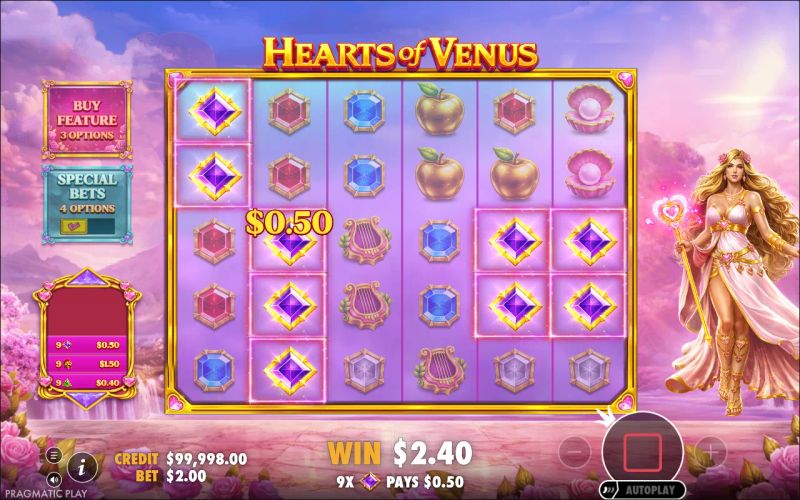
If you’ve played slots for more than five minutes lately, you know Pragmatic Play loves a 6×5 scatter-pays grid. The studio has put that board through plenty of releases already. But with Hearts of Venus, the studio has taken that familiar multiplier-spot mechanic, slapped a Roman mythology theme on it, and cranked the volatility up to eleven.
I took Hearts of Venus for a lengthy spin to see how it holds up. If you don’t have the patience for a brutal base game, look away now. But if you’re chasing massive max wins, you’ll want to pay attention.
The Base Game: Prepare for the Grind
Let’s be brutally honest: the base game in Hearts of Venus is mostly waiting.
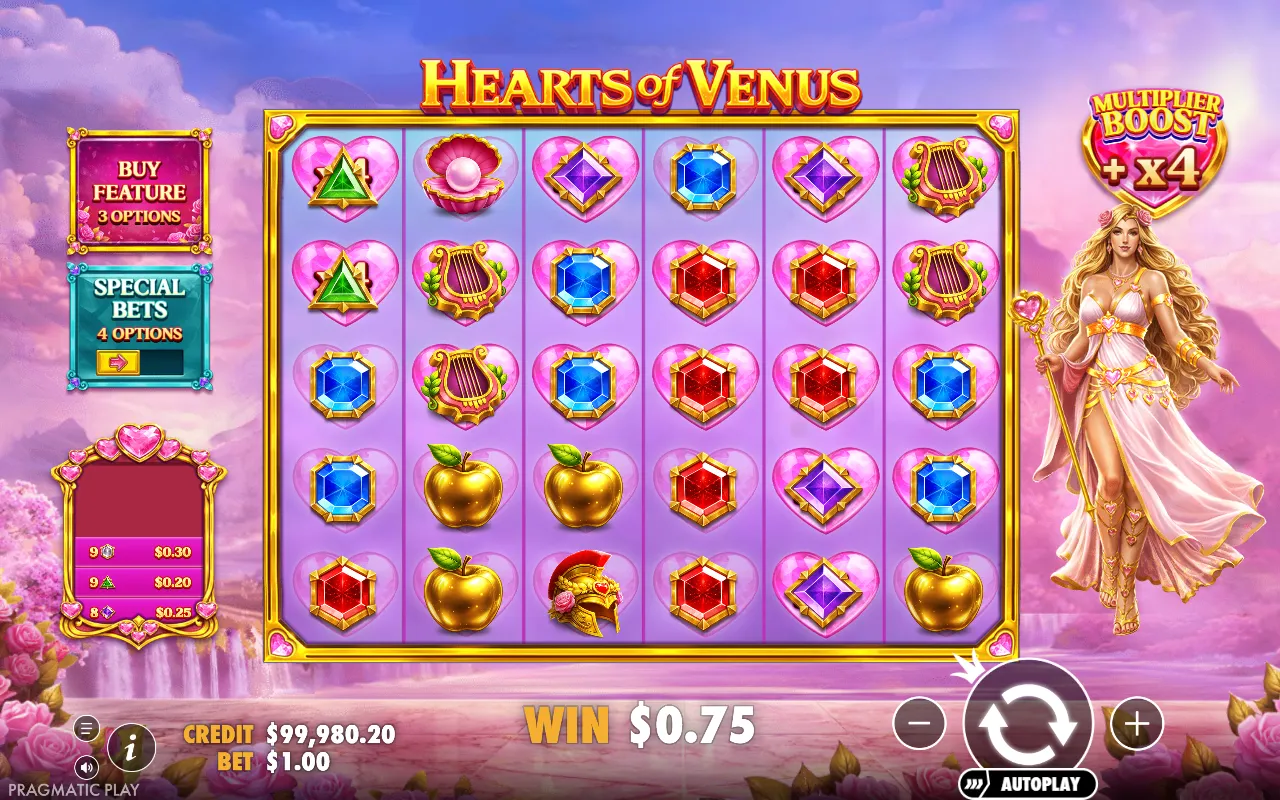
The game uses a standard scatter-pays system where 8 or more matching symbols anywhere on the 6×5 grid trigger a win and a tumble. However, the base symbols carry almost zero weight on their own. Hitting 8 or 9 of the lower-tier gems won’t even cover your bet, returning just a fraction of your stake. To see any real base-game money, you need clusters of 12 or more (the Golden Apple, for example, jumps to a nice 50x at this level).
The game tries to help you out with Multiplier Spots. A random multiplier, anywhere from x2 to x1024, can land on any cell on any spin or tumble. When a winning symbol explodes on top of one, the spot grows by its starting value again. If you get multiple spots in one win, they add together.
The downside is that these spots clear at the end of every spin. Over my base rounds, getting a win to land on top of a spot before the tumbles fizzled out felt like a steep hill to climb. I hit a cold streak of about a dozen dead spins, interspersed with tiny fractional wins of 0.3x and 0.75x. It’s quiet, it’s grindy, and it’s strictly there to tease the bonus.
The Free Spins: Where the Math Goes Crazy
Everything changes when you land 3 to 6 scatters and trigger the Free Spins. You are only awarded 6 spins to start, which feels stingy until you realize how the math model works.
In the bonus, the multiplier spots are permanent. Better yet, the grid starts with a multiplier already sitting on all 30 cells (ranging from x2 to x16, depending on how many scatters triggered the feature).
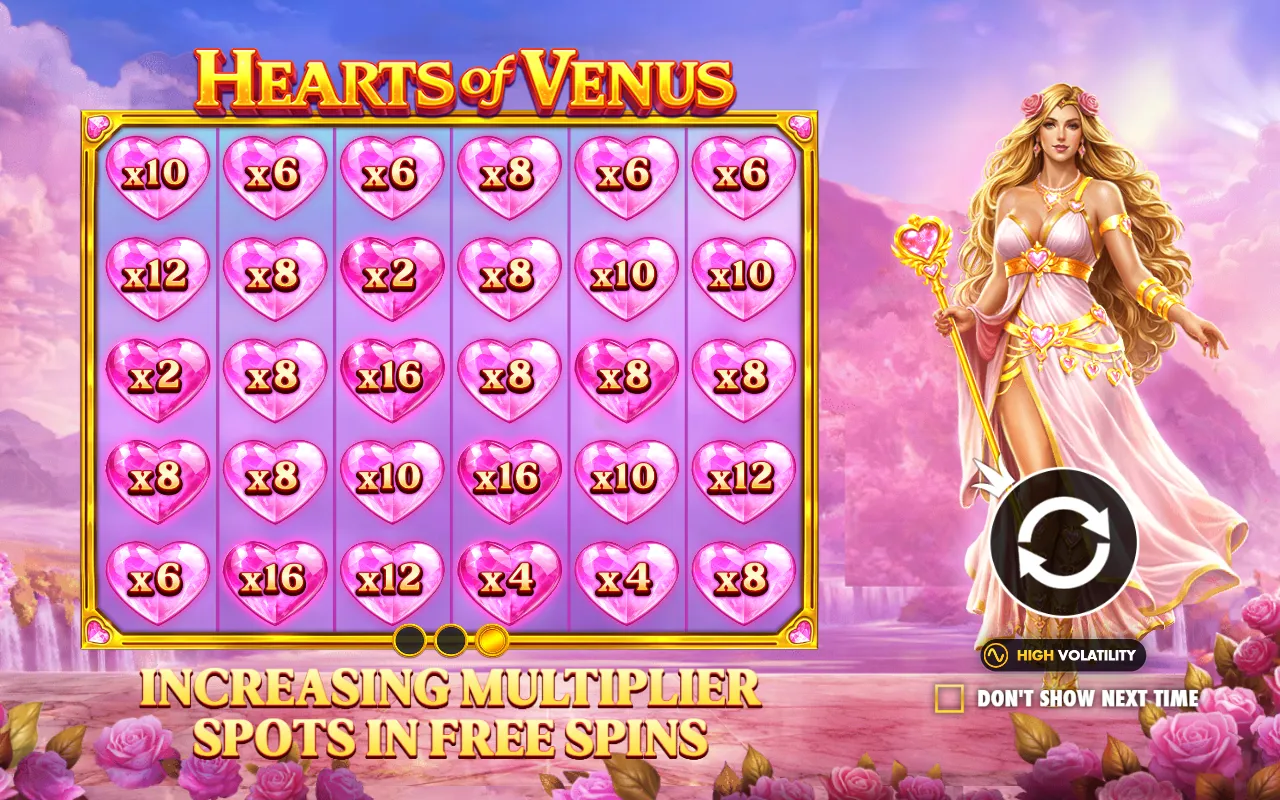
This is where the game turns into a snowball effect. Because the spots never reset, every explosion on a marked cell pumps up its value. The game also introduces a scatter collection meter. Every 3 scatters you collect does two things:
- It awards +2 extra spins.
- It pushes the global multiplier boost up a level.
This boost dictates how fast your cell multipliers grow. If you can keep the tumbles going and collect enough scatters, that ladder climbs all the way to a staggering x1024 (which also grants +10 spins).
Hearts of Venus vs. Moon Rush
It’s impossible not to compare this to Moon Rush, which Pragmatic released literally a day after this slot. Both use the same 6×5 format, though the two build their cell multipliers differently.
However, Moon Rush is the safer, softer of the two. It caps its multipliers at x128 and has a max win of 5,000x. Hearts of Venus is for the hardcore high-volatility crowd. It pushes those multipliers to x1024 and boasts a massive 25,000x max win, all backed by a very respectable flat RTP of 96.50%.
When the bonus round pops off, the collected scatters keep adding spins, and you’re dropping 12-symbol combos onto a board littered with x256 and x512 multipliers, it is one of the most exciting experiences you can have on a grid slot. But you have to be willing to endure a base game that pays out pennies while you wait for the scatters to land.