 Powered by SlotsReach.com
Surviving the Base Game Grind
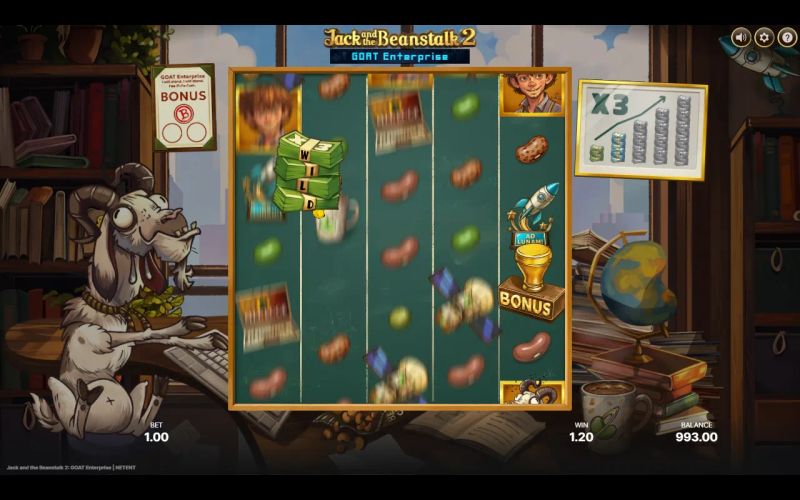
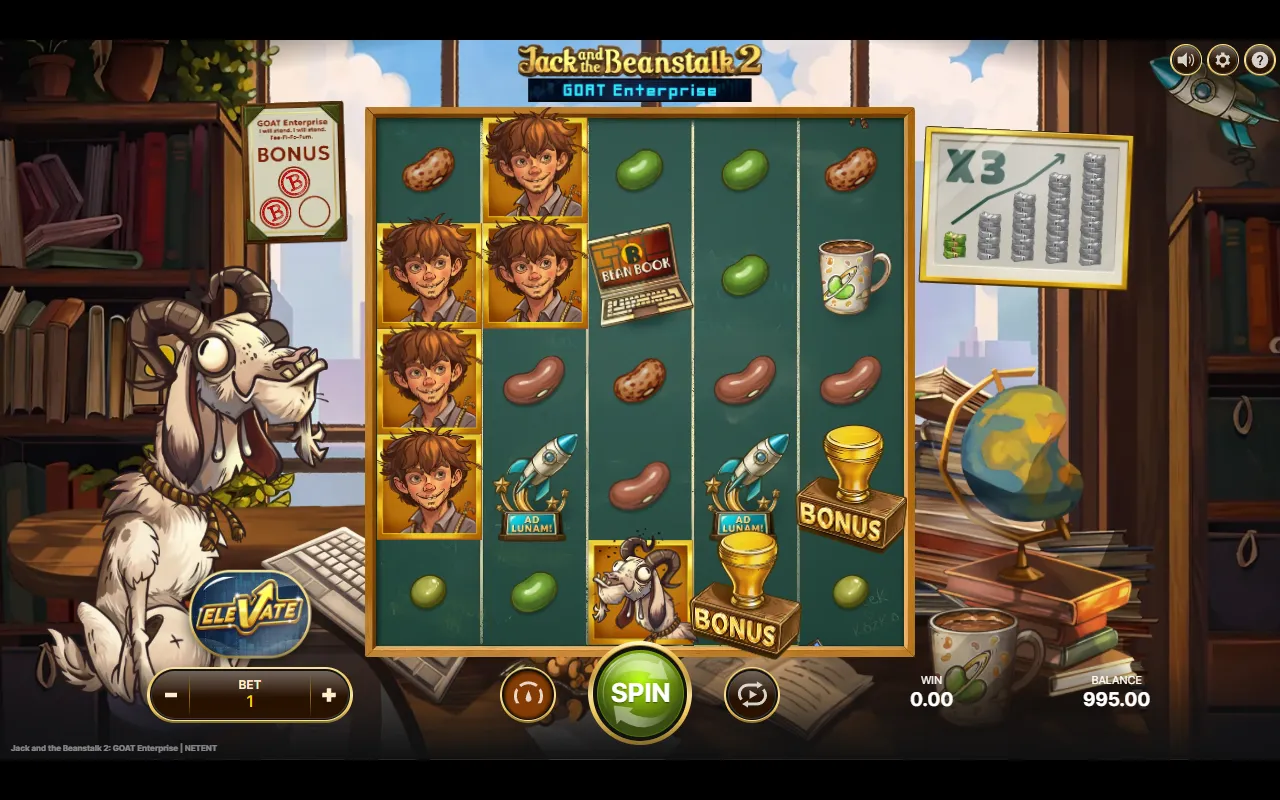
When you boot up a highly volatile slot with a 20,000x max win and a 96.32% RTP, you already know the base game isn’t where the big money lives. The top premium symbol here pays just 25x for a five-of-a-kind, which is a massive flashing sign that you aren’t going to get rich matching standard symbols on this 5×5 grid.
Instead, the base game is where you wait. It’s a quiet stretch of low-paying coffee beans and office equipment designed to slowly chip away at your balance while you pray for the mechanics to wake up.
Your main lifeline here is the Walking Wilds. Whenever a wild lands on reels 2 through 5, it triggers a re-spin and steps one reel to the left until it walks off the board. Each wild carries an x3 multiplier, but slot nerds take note: if you get more than one wild in a winning line, their values are added, not multiplied (so two wilds give you an x6, not an x9).
In my session, the base game played exactly as you’d expect for this math model, patient, but hard on the balance. The dead spins can stack up, and most hits barely cover your bet. My only saving grace was a 23x hit when a walking wild linked up with a second wild under a row of premiums. That single chain accounted for almost my entire base game return, and not one of those base spins brought the bonus in on its own.
The Bonus Board: High Tension, Delayed Gratification
To get into the main feature, you need three bonus symbols in a single spin. The game tracks this with a stamp card beside the reels. Because the card wipes clean on the very next spin, two stamps carry nothing forward. It’s a beautifully blunt way to deliver a near-miss, and it stings every time.
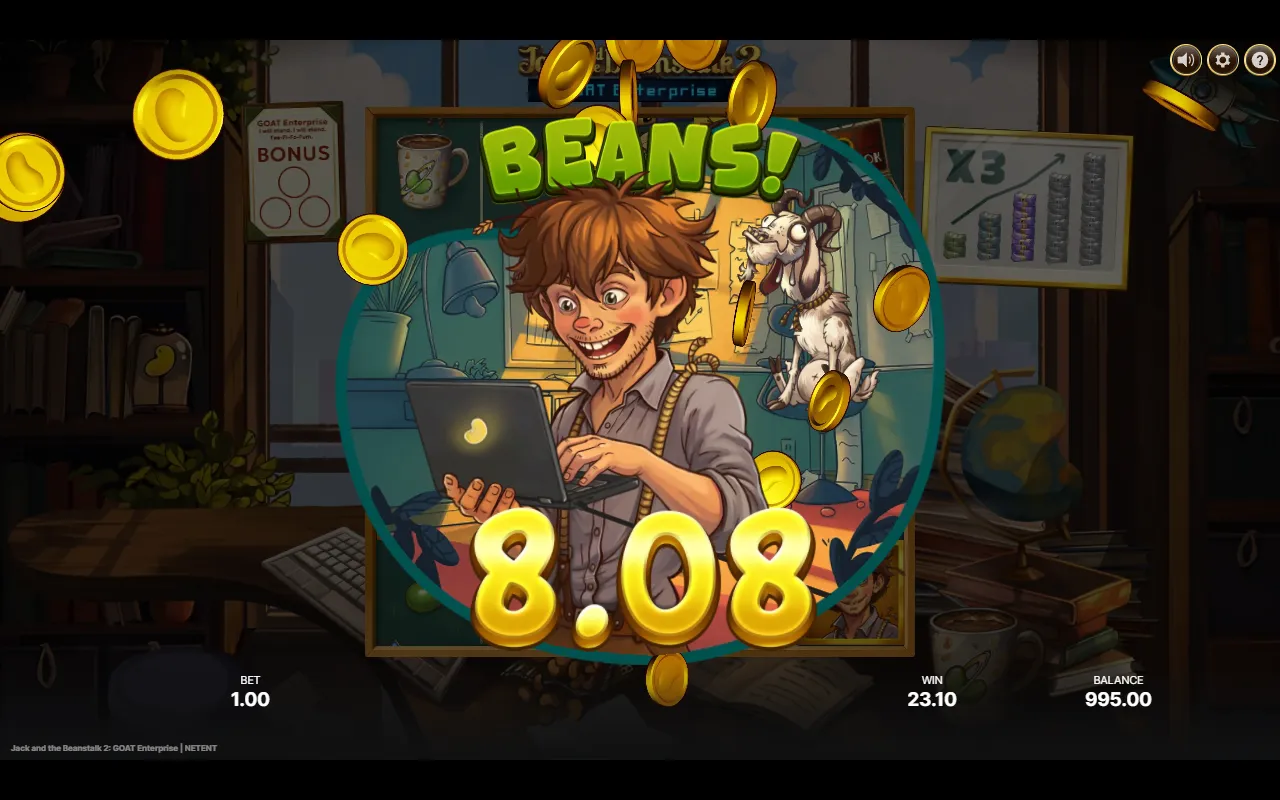
Once you finally trigger it, the office reels disappear, replaced by a blank triangular grid. If you were expecting traditional free spins, think again. This is a coin-collecting bonus where Golden Bean Coins land with values between 1x and 10x. But the coins are useless on their own: they rely entirely on a cast of special modifier symbols to build your payout:
- Walking Rockets: Step left with each spin, tripling the value of any coin they pass.
- The Collector: Sucks up every coin’s value on the board into a single cell.
- The Sharer: Adds its own value to everything in view.
- The Spreader: Chucks new coins into empty neighboring spaces.
There’s also an upgrade meter above the grid. Collect enough upgrade symbols, and your rockets grow up to five rows high while adding extra spins. (There is also a Super Bonus variant that skips the meter entirely, giving you five-high rockets and a guaranteed 10x coin from spin one).
Here is the defining rule of this bonus: it pays nothing until the final spin. All the multiplying, sharing, and collecting happens without a single cent hitting your balance. It builds incredible tension, but it can also be a bit deceptive. A board cluttered with 1x and 2x coins might look amazing, but if you don’t land a Collector or a Rocket, the final payout can be a bit of a reality check.
Chasing the 20,000x Dream
The number in the title makes it clear this is a sequel to NetEnt’s legendary 2011 Jack and the Beanstalk, though this version trades the fairytale for a corporate world full of crypto bros and rockets.
Hitting that 20,000x cap requires a very specific, perfect storm on the bonus board. The base game simply can’t do it. To get anywhere near the max win, you need the Spreader to flood the board with coins, a five-high Rocket to walk across and multiply them, and a Collector to hoover up that massive sum before the spins run out.
That is the sequence you are paying to chase. The rest of the slot? That’s just the price of admission while you wait for the stars to align. If you have the bankroll and the patience for a grind, this corporate beanstalk is worth the climb, just don’t expect it to be easy.